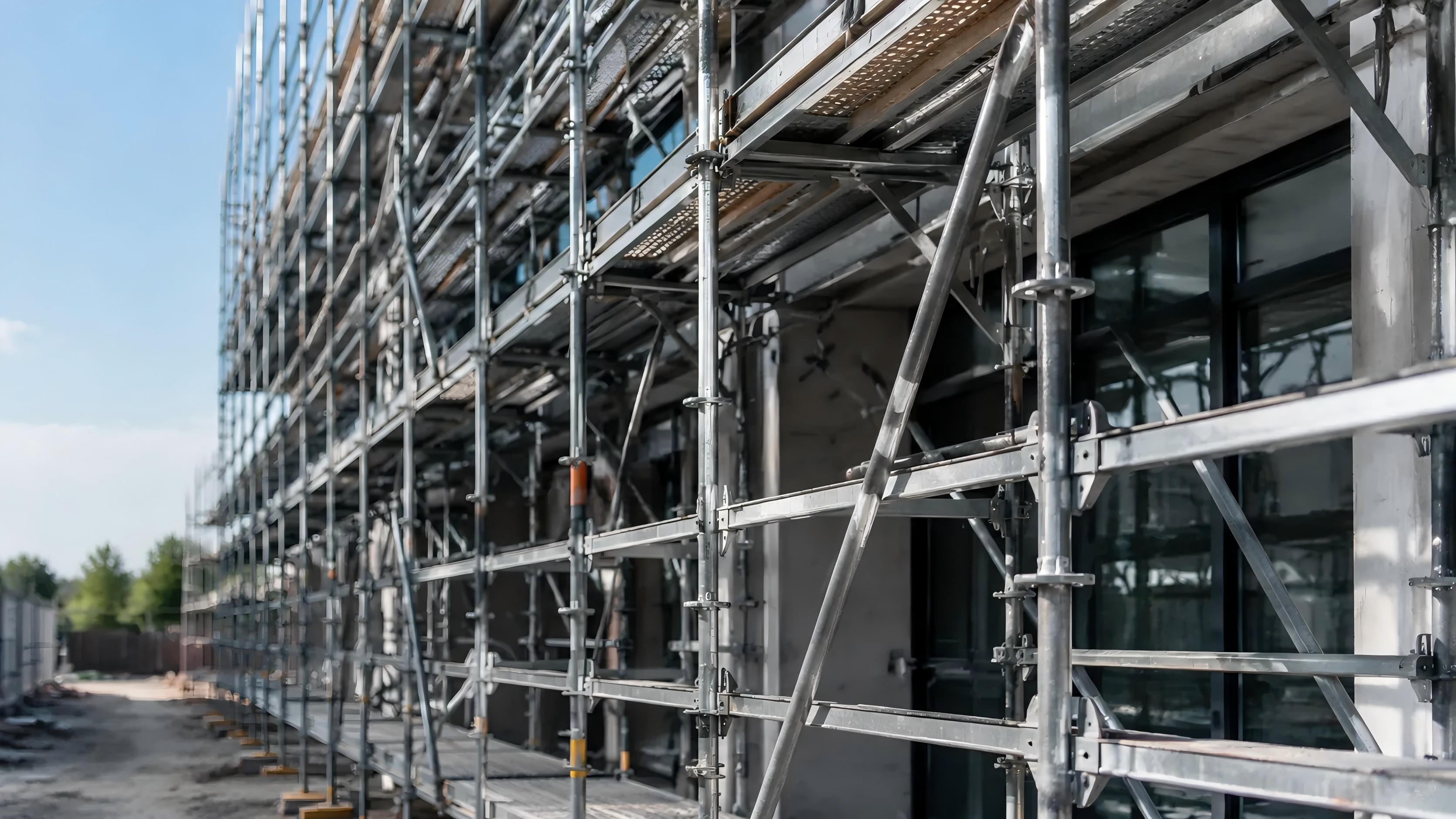
Table of Contents
· Introduction
· What Are Scaffolding Galvanized Pipes?
· Key International Standards (EN39, BS1139, JIS)
· Technical Specifications and Dimensions
· Types of Scaffolding Steel Pipes
· Surface Treatment: Hot-Dipped Galvanization
· Applications and Benefits
· Conclusion
· Frequently Asked Questions
Introduction
In the construction and industrial sectors, scaffolding galvanized pipes serve as the backbone of temporary structures, providing essential support for workers, materials, and equipment. These scaffolding steel pipes are engineered to meet rigorous safety and performance standards, ensuring stability on job sites ranging from small-scale renovations to massive infrastructure projects. This guide provides a comprehensive overview of galvanized scaffolding pipes, covering their specifications, standards, and the critical role of corrosion-resistant coatings .
What Are Scaffolding Galvanized Pipes?
Scaffolding pipes are structural steel tubes used to create temporary frameworks. The term "galvanized" refers to a protective zinc coating applied to the steel to prevent rust and corrosion. This treatment is crucial for scaffolding used outdoors or in harsh environments, significantly extending the lifespan of the equipment and ensuring worker safety .
These pipes are typically made from high-strength carbon steel grades such as Q235 or Q345 and are manufactured to meet specific international standards that govern their dimensions, weight, and structural integrity .
Key International Standards
To ensure safety and interoperability, scaffolding pipes are manufactured according to several recognized international standards:
|
Standard |
Description |
Key Region |
|
EN 39:2001 |
Specifies technical delivery conditions for steel tubes used in scaffolding systems. It outlines dimensions, tolerances, and mechanical properties. |
Europe (EU) |
|
BS 1139 |
A British standard covering metal scaffolding components. Often used in conjunction with or similar to EN39. |
United Kingdom & Commonwealth |
|
JIS G3444 |
Japanese Industrial Standard for carbon steel tubes for general structural purposes, commonly applied to scaffolding. |
Japan & Asia |
Scaffolding tubes that comply with these standards are characterized by their straightness, consistent wall thickness, and reliable load-bearing capacity .
Technical Specifications and Dimensions
The most common size for scaffold steel pipe is the 1-1/2 inch (48.3 mm) outer diameter tube. The wall thickness varies based on the required load capacity, categorized into "Types" .
Typical Dimensions for 48.3mm Scaffolding Tubes:
|
Type |
Outer Diameter (OD) |
Nominal Wall Thickness |
Weight (approx.) |
|
Type 2 |
48.3 mm |
2.9 mm |
3.24 kg/m |
|
Type 3 |
48.3 mm |
3.2 mm |
3.56 kg/m |
|
Type 4 |
48.3 mm |
4.0 mm |
4.37 kg/m |
Note: The outside diameter tolerance is typically ±0.5mm, and the mass tolerance is usually -7.5% per single tube .
Types of Scaffolding Steel Pipes
Beyond the standard round pipe, the market offers variations to suit different structural needs.
1. Standard Round Pipe (48.3mm OD): The most common type, used universally in construction for vertical standards, horizontal ledgers, and diagonal braces .
2. Heavy-Duty Pipes (60.3mm OD): Used for projects requiring higher load-bearing capacity, such as heavy civil engineering works .
3. Specialized Shapes: Some manufacturers offer pipes with different cross-sections, such as hexagonal pipes, which claim to provide superior load distribution and stability compared to traditional round pipes .
Surface Treatment: Hot-Dipped Galvanization
Corrosion resistance is a primary concern for scaffolding pipes. The most common and effective treatment is hot-dipped galvanization (GI) . This process involves immersing the steel tube in molten zinc, creating a robust metallurgical bond that protects the base metal .
Key Benefits of Galvanized Scaffolding Pipes:
· Corrosion Resistance: Provides long-term protection against rust and oxidation, even in coastal or wet environments .
· Durability: Extends the service life of the equipment, leading to long-term cost savings.
· Safety: A rust-free pipe is less likely to weaken or fail, maintaining structural integrity.
· Reusability: The durable coating allows pipes to be used on multiple projects without significant degradation .
Applications and Benefits
Scaffolding galvanized pipes are utilized across various sectors, including building construction, oil and gas, shipbuilding, and industrial maintenance .
Advantages Over Traditional Materials:
· High Strength-to-Weight Ratio: Offers better load capacity compared to wood or bamboo scaffolding .
· Stability: Steel scaffolding is stiffer, reducing bounce and providing a safer platform .
· Fire Resistance: Unlike timber, steel does not burn, adding an extra layer of safety.
· Versatility: Compatible with a wide range of couplers, fittings, and accessories for complex configurations .
Conclusion
Selecting the right scaffolding galvanized pipe is critical for any construction project. Adhering to standards like EN39 or BS1139 guarantees the safety and reliability of the structure. The investment in high-quality, hot-dipped galvanized steel pipes pays off through enhanced durability, reduced maintenance, and a safer working environment . Whether for a small DIY project or a large-scale industrial build, understanding these specifications helps in choosing the best product for the job .
Frequently Asked Questions
1. What is the standard diameter of a scaffolding pipe?
The industry standard outer diameter for a scaffolding tube is 48.3mm (1-1/2 inches). This ensures compatibility with standard couplers and fittings .
2. What is the difference between Type 3 and Type 4 scaffolding pipes?
The primary difference is the wall thickness. Type 3 has a thickness of 3.2mm, while Type 4 is 4.0mm. Type 4 offers a higher load capacity and structural integrity .
3. What does "hot-dipped galvanized" mean for scaffolding pipes?
It is a process where the steel pipe is coated in molten zinc. This provides superior corrosion and rust resistance compared to painted or bare steel pipes, making them ideal for outdoor use .
4. Why should I choose a galvanized pipe over a standard black pipe for scaffolding?
Galvanized pipes offer superior corrosion and rust resistance, making them more durable and longer-lasting than standard black pipes. They are ideal for outdoor and long-term use .
Get a Quote & Price List
Tell us the product, quantity and destination port — a sales engineer replies within 24 hours.