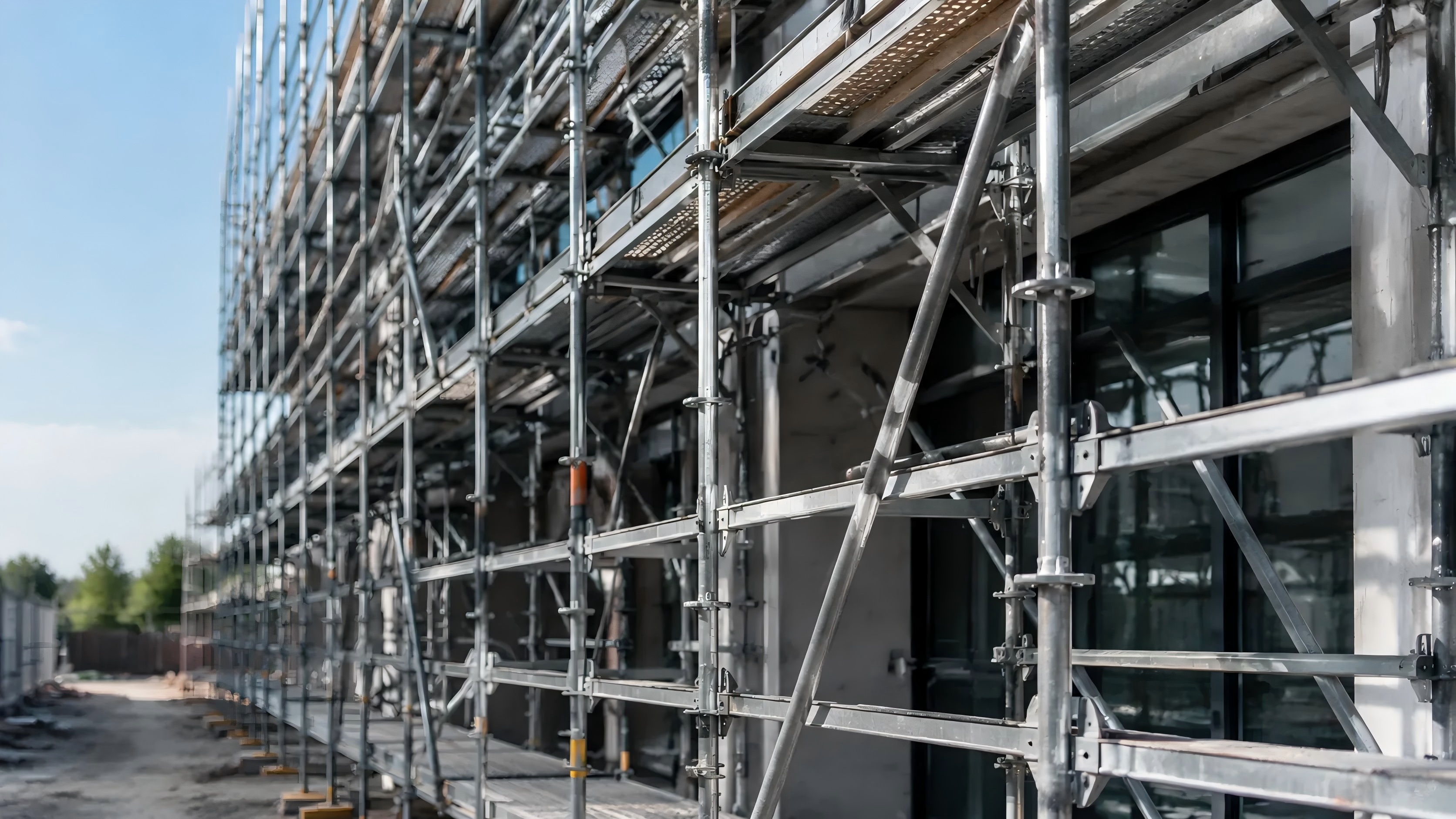
A cuplock ledger is the horizontal member I use in a modular cuplock scaffolding system to link the standards and keep the frame stable. It acts as a horizontal ledger and, where needed, a horizontal guardrail member. In plain terms, it helps the scaffold hold its shape and carry safe working loads across the structure.
What it does
- Ties the standards together
- Supports guardrails and working platforms
- Transfers horizontal load through the node points
- Improves rigidity and stability on the scaffold bay
This part is critical because it helps the scaffold stay aligned under site load, movement, and wind pressure. I treat it as a structural connector, not just a tube.
Where it is used
A cuplock scaffolding ledger is widely used in:
- Construction sites
- Shipbuilding yards
- Plant maintenance and shutdown work
- Industrial access platforms
- Facade and repair scaffolding
For buyers, the main concern is simple: the ledger must fit cleanly, lock securely, and deliver reliable support across the full scaffold system.
Cuplock Ledger Sizes
The standard size for a cuplock ledger in modular cuplock scaffolding systems is built around a 48.3mm scaffold tube diameter. This size is widely used because it fits perfectly with common scaffold components, ensuring stability and ease of assembly.
Wall Thickness Options
- 2.7mm to 3.2mm: These are the typical wall thickness options for cuplock ledger tubes. Thicker walls provide higher load capacity and better durability, especially for heavy-duty or outdoor applications.
Lengths and Weights
| Lengths (mm) | Typical Unit Weight (kg) | Approximate Ledger Weight (kg) |
|---|---|---|
| 6000 | 3.5 | 21 |
| 12000 | 7.0 | 42 |
| 18000 | 10.5 | 63 |
Note: Exact weights depend on wall thickness and specific manufacturing tolerances.
Summary
- Standard diameter: 48.3mm scaffold tube
- Wall thickness: 2.7mm, 3.0mm, 3.2mm options
- Common lengths: 6m, 12m, 18m (custom lengths available)
- Ledger weight: Based on size and wall thickness, essential for load calculations and shipping planning
Choosing the right size ensures safety, compatibility, and cost efficiency for your scaffolding projects.
Cuplock Ledger Steel Grade
When I source a cuplock ledger, I look at two things first: steel grade and blade quality. Those two decide how well the ledger fits, how long it lasts, and how safely it handles site loads.
Q235 vs Q345
| Grade | Main Use | Key Point |
|---|---|---|
| Q235 carbon steel | General-purpose scaffold work | Good strength, easy to fabricate, cost-effective |
| Q345 carbon steel | Heavier-duty jobs | Higher yield strength, better for tougher load demands |
What I look for
- Q235 carbon steel for standard modular cuplock scaffolding system use
- Q345 carbon steel when the job needs more margin for load and wear
- Consistent tube quality, with no visible bends, dents, or uneven wall areas
Ledger Blade Design
The drop-forged ledger blade is the version I prefer for serious site work. It gives a tighter fit and better strength than a basic cast blade.
| Blade Type | Strength | Fit | Reliability |
|---|---|---|---|
| Drop-forged ledger blade | Higher | Tighter | Better for long-term use |
| Cast blade | Lower | Can vary | More risk of wear or fit issues |
Why it matters
- Blade strength affects how well the cup-and-blade connection holds under load
- Fit accuracy keeps the node-locking cup mechanism stable
- Weld quality reduces the risk of cracking at the joint
- Poor blade alignment can throw off the whole horizontal ledger line
What I check before buying
- Clean blade edges with no distortion
- Strong welds with full, even contact
- No gaps between the blade and tube
- Correct blade position for smooth locking into the cup
A well-made galvanized scaffold ledger with the right steel grade and blade design gives me better safety, longer service life, and fewer site problems.
Node Locking and Load Capacity
The cup-and-blade connection is the core of a cuplock ledger system. It features a node-locking cup mechanism that ensures a secure fit between the horizontal ledger and the vertical scaffold tube. This design provides easy assembly and strong locking under load, preventing accidental disconnection.
Point load capacity rating indicates how much weight a single connection can support. It’s crucial for safety and stability, especially when placing heavy materials or equipment on the scaffold. Always check the lateral stability to ensure the structure can resist side forces, which is vital for safety in high-wind or uneven conditions.
Understanding scaffold load limits involves reading the load capacity ratings and spacing checks. Properly spaced cuplock ledgers and node-locking cups help distribute weight evenly, avoiding overloads that could lead to failure. Always refer to manufacturer load charts and follow safety standards to ensure your scaffold system remains stable and secure during use.
Cuplock Ledger Standards
I treat BS 1139 compliance and EN 10219 compliance as the baseline for every cuplock ledger I source. That gives me a clear check on tube quality, dimensions, and material consistency for global jobs.
What I check
- BS 1139: common scaffold tube standard for strength and size control
- EN 10219: cold-formed structural tube standard for reliable steel performance
- EN 12810 compliance: system-level scaffold safety and compatibility
- Other local scaffold standards when the project requires them
Quality proof I ask for
- Mill Test Certificate (MTC) for steel grade traceability
- Third-party load test report for verified capacity
- Full test data for the cup-and-blade connection and ledger welds
Why it matters
A galvanized scaffold ledger is only as good as its paperwork. If the documents are weak, I treat the product as a risk. For B2B buyers, clean compliance records make inspections easier, reduce site delays, and support safer purchasing decisions.## Cuplock Ledger Standards
BS 1139 and EN 10219
I make compliance a front-line check on every cuplock ledger I supply. For buyers, that means the tube and fittings need to match the right scaffold rules, not just look right on site.
- BS 1139 compliance supports trusted scaffold tube sizing and quality control.
- EN 10219 compliance covers cold-formed structural steel tube requirements.
- Together, these standards help confirm the cuplock scaffolding ledger is built for real jobsite use, not light-duty guesswork.
EN 12810 and scaffold rules
For system scaffolding, I also check against EN 12810 compliance and related scaffold standards. That matters because a horizontal ledger is part of a load path, not just a bar between standards.
I look for:
- Correct cup-and-blade connection fit
- Clean welds and stable alignment
- Consistent point load capacity rating
- Proper spacing and frame layout support
This is the practical side of safety. If the ledger does not lock cleanly into the node-locking cup mechanism, the system loses efficiency and stability.
Proof of quality
I do not treat paperwork as optional. For procurement, these documents matter:
- Mill Test Certificate (MTC) for steel grade traceability
- Third-party load test report for verified capacity
- Batch records for the Q235 carbon steel or Q345 carbon steel used
If a supplier cannot provide these, I treat that as a risk. For me, compliance is not just a label — it is proof that the galvanized scaffold ledger is built to spec, backed by test data, and ready for global project use.
Surface Finish and Corrosion Resistance of Cuplock Ledger
Durability is key for scaffolding components, especially in harsh environments. Hot-dip galvanized horizontals, including cuplock ledgers, provide the best long-term corrosion resistance. This process coats the steel with a thick layer of zinc, protecting against rust and extending service life—ideal for outdoor, marine, and rental applications.
Electro-galvanized and painted options are also available, offering lighter corrosion protection with a smoother surface finish. These finishes are suitable for indoor use or temporary setups where exposure to elements is limited.
| Finish Type | Best For | Benefits |
|---|---|---|
| Hot-dip galvanized | Marine sites, outdoor work, rental fleets | Long-lasting, high corrosion resistance |
| Electro-galvanized | Indoor, temporary use | Good surface finish, moderate protection |
| Painted | Indoor, controlled environments | Cost-effective, customizable appearance |
Choosing the right surface finish depends on your project environment. For outdoor or marine work, hot-dip galvanized cuplock ledgers are the best choice for durability and safety.