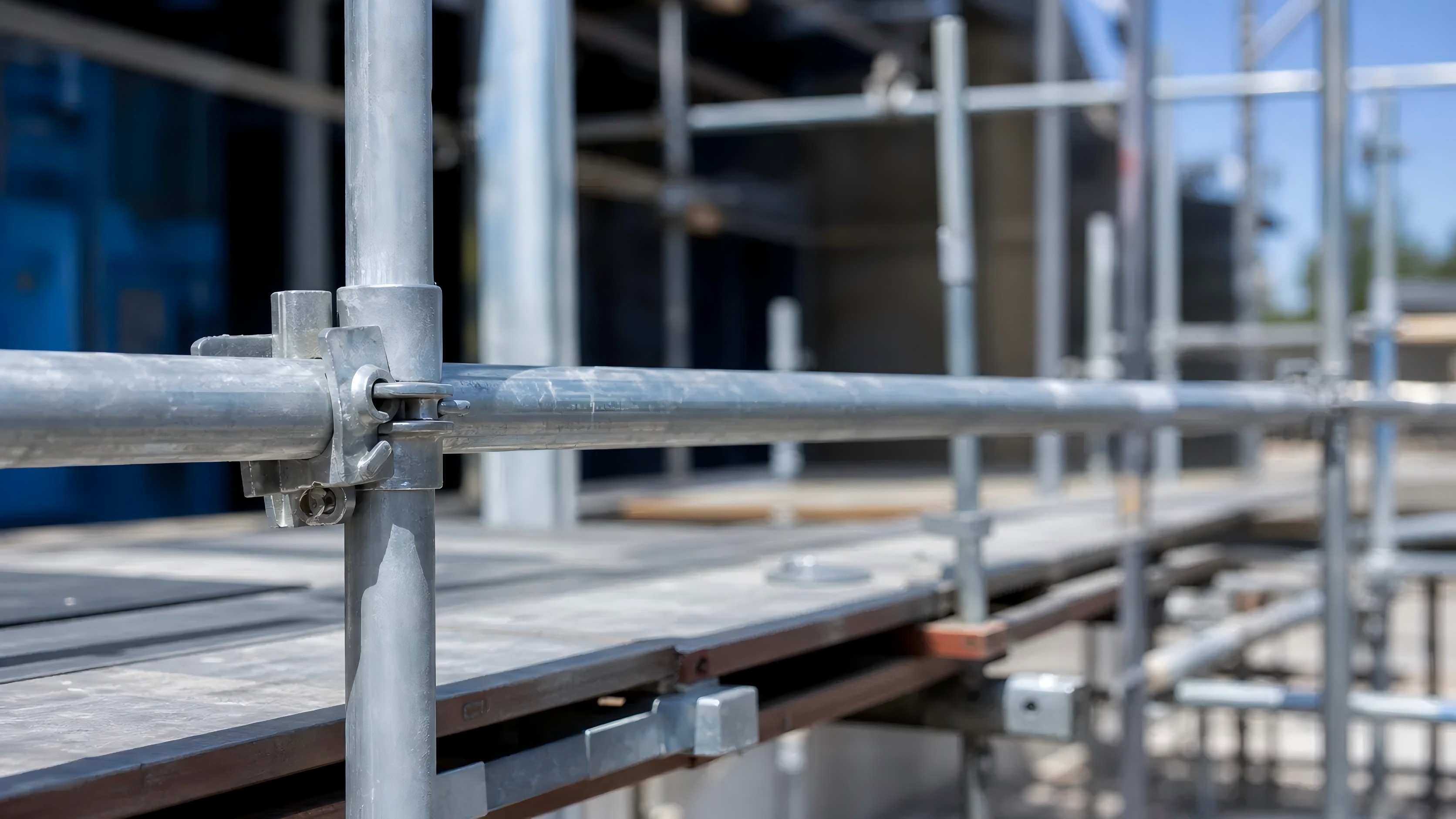
A cuplock ledger is a key horizontal component used in modular scaffolding systems, providing essential support and stability. It connects vertical standards with other horizontal elements, such as transoms or braces, forming a secure framework for construction projects.
The core function of a cuplock ledger is to transfer loads efficiently across the scaffolding structure, ensuring safety and durability. It helps distribute weight evenly, reducing stress on individual components and maintaining system stability under various working conditions.
At the heart of this system is the cuplock node point mechanism. This innovative design allows multiple components—like ledgers, transoms, and braces—to be locked together quickly and securely with a single blow. This efficient locking system simplifies assembly, enhances safety, and speeds up construction, making it a trusted choice for professional scaffolding solutions worldwide.
Key Dimensions, Specifications, and Standards for Cuplock Ledgers
Understanding the right dimensions and standards for cuplock ledgers is crucial for safe, reliable scaffolding. Here’s what you need to know:
Standard Tube Outer Diameter and Wall Thickness
- The most common outer diameter for scaffolding pipes used in cuplock ledgers is 48.3 mm.
- Wall thickness options typically range from 3.2 mm to ensure strength and durability.
- These dimensions meet international safety and load requirements.
Common Lengths
- Cuplock ledgers come in various lengths to suit different project needs.
- Metric sizes: from 0.6 m to 2.5 m.
- Imperial sizes: roughly equivalent, often in feet or inches, for easy compatibility worldwide.
Steel Grades and Mechanical Properties
- Made from high-quality steel grades like Q235, Q345, S235, and S355.
- These steels provide excellent yield strength and shear resistance, essential for load transfer and safety.
- The choice of steel grade depends on the project’s load requirements and safety standards.
Compliance with Global Standards
- Our cuplock ledgers meet or exceed key standards such as:
- BS EN 12810 (Europe)
- EN 10219 (cold-formed steel tubes)
- ASTM standards (USA)
- This compliance guarantees quality, safety, and compatibility across different markets.
Importance of Mill Test Certificates (MTC)
- Every batch of cuplock ledgers comes with an MTC.
- It verifies:
- Material origin
- Steel grade
- Mechanical properties
- Compliance with standards
- MTCs are essential for quality assurance and project documentation.
| Specification | Details |
|---|---|
| Outer Diameter | 48.3 mm |
| Wall Thickness | 3.2 mm (standard) |
| Lengths | 0.6 m to 2.5 m |
| Steel Grades | Q235, Q345, S235, S355 |
| Standards | BS EN 12810, EN 10219, ASTM |
Choosing the right cuplock ledger dimensions and steel quality ensures your scaffolding system is safe, compliant, and built to last.
Cuplock Ledger Surface Finish
Galvanized vs. Painted
For a cuplock ledger, the finish affects how well it handles weather, handling, and long-term upkeep. I usually break it down like this:
| Finish | Best Use | Main Benefit | Main Tradeoff |
|---|---|---|---|
| Hot-dip galvanized (HDG) | Outdoor and repeated use | Strong corrosion resistance | Higher upfront cost |
| Painted | Shorter-term or budget projects | Lower initial cost | Needs more care |
| Powder-coated | Clean finish and light-duty use | Good appearance and basic protection | Surface damage can expose steel |
Why HDG Works Well
A hot-dip galvanized finish is the safer pick when the cuplock horizontal ledger will see rain, moisture, or rough site conditions. It gives the steel a protective zinc layer, which helps slow rust and keeps the ledger in service longer.
Cost vs. Life Cycle
I look at the full job cost, not just the purchase price.
- HDG: higher starting cost, lower maintenance burden
- Painted: cheaper upfront, but touch-up work adds cost over time
- Powder-coated: neat finish, but best only when handling damage is limited
Simple Maintenance Rules
To keep a cuplock ledger working well:
- Check for chips, deep scratches, and rust spots
- Store pieces dry and off the ground
- Touch up damaged painted surfaces fast
- Keep galvanized ledgers clean after heavy site exposure
- Inspect welds and blade areas during every reuse cycle
For buyers who want steady performance and less rework, I favor HDG scaffolding accessories from a factory-direct scaffolding supplier like Sino East. It is the practical choice for global projects that need durability and simple upkeep.